
The Spoil Grounds: Waste Architectures in Infrastructures of Extraction
Researcher
Therese Keogh
Published
18 Mar 2025
Funding
Design Thinking Grant
The Spoil Grounds brings together artists, designers, and poets in a series of conversations, tracing tidal flows and sedimental depositions through creative and collective practice.
This project investigates the environmental and social impacts of dredging in the Port of Newcastle and the Hunter estuary system. Led by researcher Therese Keogh, it explores "waste architectures" - landscapes formed by industrial by-products - and brings together designers, artists, and researchers to critically examine the effects of extraction.
The project serves as a model for future creative design that moves beyond our coal-dependent present, offering new possibilities for collective and creative design thinking in the future.
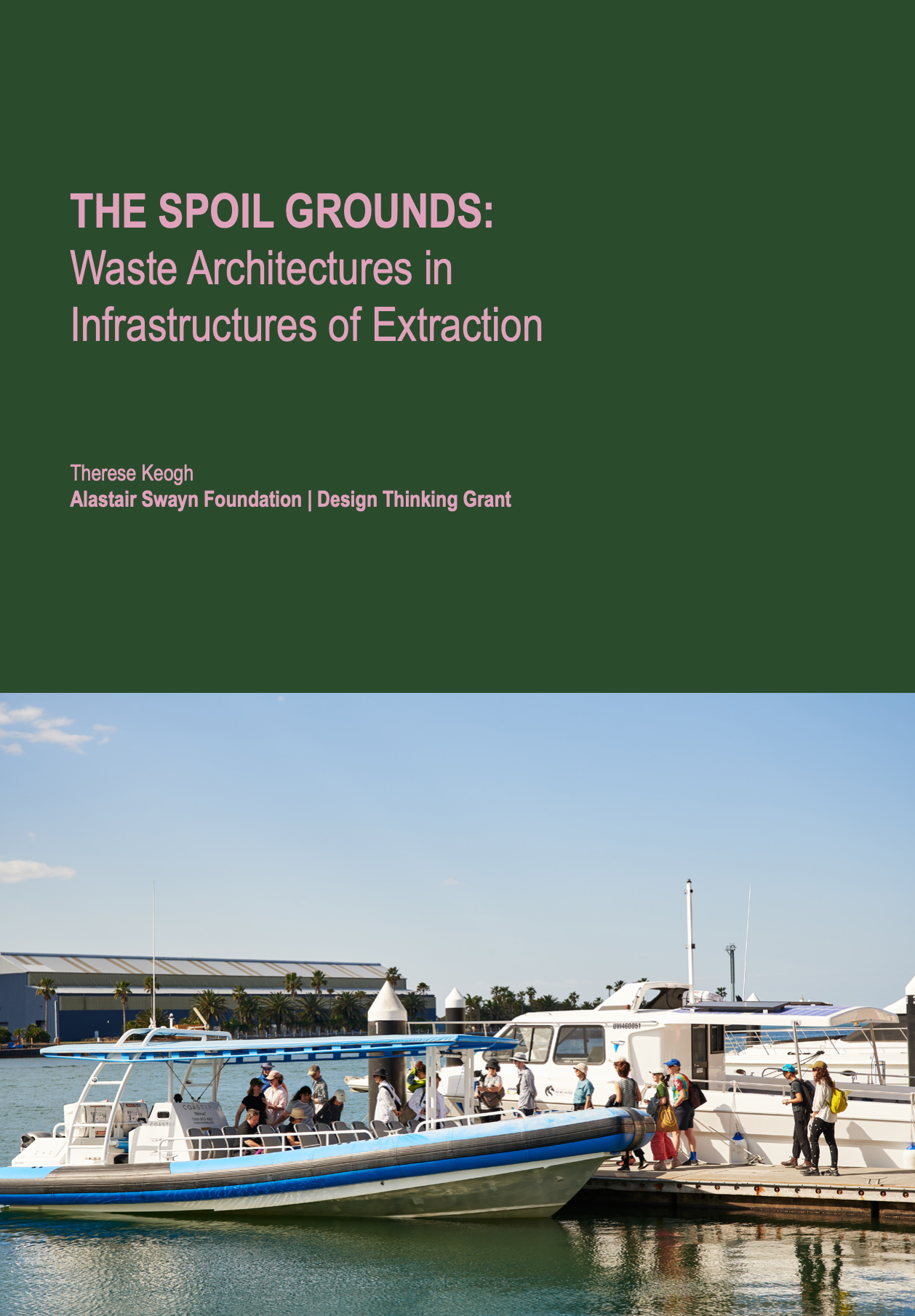
The study involved a public symposium held across multiple locations in the Coquun/Hunter Estuary and Port of Newcastle in September 2024, and the publication of a pamphlet featuring written contributions and artworks from symposium presenters. The outcomes highlight the intersections of infrastructure, ecology, and cultural history, encouraging reflection on how human interventions shape waterways and coastal environments.
Images: Lucy Parakhina
